
Buying a condo in Chicago? Make sure it can handle harsh winters.
At ServiceMaster Restoration by Zaba, we’ve seen too many homeowners caught off guard by roof leaks, burst pipes, and costly water damage.
This checklist will help you catch those red flags before closing.
What to Check Before Buying a Chicago Condo in Winter
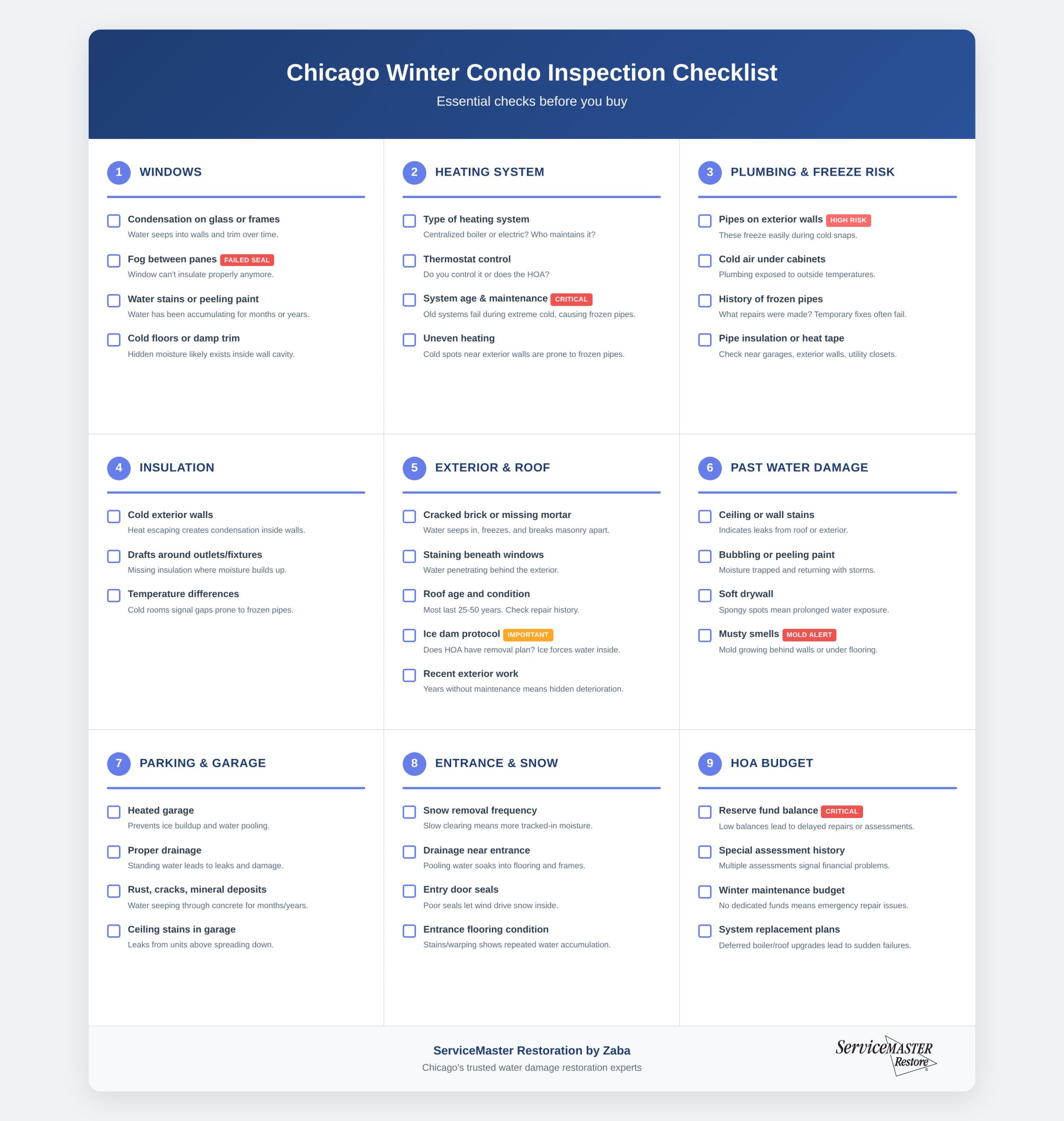
Windows

If you’re looking at an older Chicago building, there’s a good chance it still has the original windows that don’t seal properly anymore. Even when they’ve been replaced, cheaper upgrades can be just as problematic.
When freezing outdoor air meets your heated living room, condensation forms quickly, especially during those brutal cold snaps and blizzards we get every winter.
At ServiceMaster Restoration by Zaba, we regularly see what happens next: water damage creeping down the walls, mold growing behind the windowsill, and ruined hardwood floors that looked fine when you toured the place.
What to check:
- Condensation on glass or frames: This tells you warm indoor air is hitting cold window surfaces. Over time, that water seeps into the surrounding walls and trim.
- Fog or moisture between panes: The seal has failed. The window isn’t doing its job anymore, and moisture will keep getting inside.
- Water stains or peeling paint below windows: This means water has been accumulating here for months or even years.
- Cold floors or damp trim near windows: There’s probably moisture hiding inside the wall cavity that hasn’t shown itself yet.
Heating System
Heat isn’t just about staying comfortable during a Chicago winter. It’s what protects the entire building from frozen pipes and catastrophic water damage.
Most Chicago condos run on centralized boilers, and many of them are decades old.
We’ve responded to countless winter floods that started because the heat went out for just a few hours when temperatures dropped below zero.
What to check:
- Check the type of heat: Find out how the unit is heated and how the system serves the building. Boiler systems often serve multiple units, so a breakdown can shut off heat building-wide. If the unit uses electric heat, plan for significantly higher energy bills during Chicago winters.
- Find out who controls the heat: Ask whether you have your own thermostat or if the building controls the temperature. If the HOA manages it, you won’t be able to adjust the heat, and you’ll have to wait on them if something breaks.
- Ask about the age and maintenance of the system: Look for service records and check how old the heating system is. If it’s old or hasn’t been maintained, it’s more likely to fail when temperatures drop, and that can lead to frozen pipes and serious water damage.
- Walk through the unit and check for uneven heat: Walk through the unit and pay attention to temperature differences. If certain rooms feel noticeably colder, especially along exterior walls or near windows, you’re probably dealing with insulation gaps or poor airflow. That’s where pipes are most likely to freeze behind the walls.
Plumbing and Freeze Risk

Frozen pipes are one of the most destructive winter problems we see in local condos.
When pipes freeze, they often crack silently and release water once temperatures rise. Chicago’s freeze-thaw cycles make this especially dangerous.
Many winter pipe bursts we handle affect multiple units, not just the one where the pipe froze.
What to check:
- Check if any plumbing runs along exterior walls: Look under sinks and behind appliances. If pipes are set against exterior walls, they’re at higher risk of freezing during cold snaps, especially if the walls are poorly insulated.
- Open cabinets under sinks and feel for cold air: If the inside of the cabinet feels cold, the plumbing behind it may be exposed to outside temperatures, which can cause pipes to freeze and crack in winter.
- Ask if the unit or building has ever had frozen or burst pipes: If there’s a history of frozen plumbing, find out what repairs were made. Quick fixes or temporary patches often fail when extreme cold returns.
- Look for pipe insulation or heat tape on exposed lines: If the pipes are bare, especially near garages, exterior walls, or in utility closets, they’re more likely to freeze and cause water damage when temperatures drop.
Insulation
A lot of Chicago’s older condos were built long before modern insulation codes.
Poor insulation lets cold air penetrate, and when that cold meets warm indoor air, you get condensation trapped in places you’ll never see until there’s damage.
In our restoration work, we’ve found that inadequate insulation is often the hidden culprit behind mold and water damage that keeps coming back.
What to check:
- Touch exterior walls to see if they feel unusually cold: Cold walls mean heat is escaping and cold air is getting in. That creates condensation inside the wall that leads to mold and water damage.
- Check ceiling corners and areas around outlets or light fixtures for drafts: Drafts mean missing or damaged insulation. Cold air collects in those hidden spaces where moisture builds up unseen.
- Check for temperature differences between rooms: If some rooms stay colder or won’t warm up, you’re dealing with insulation gaps or poor airflow. Those cold spots are where pipes freeze, and moisture damage develops behind walls.
Building Exterior and Roof
The exterior of a building is its first defense against Chicago winters. Brick, mortar, and roofing materials expand and contract repeatedly due to freeze-thaw cycles.
At ServiceMaster Restoration by Zaba, we frequently trace interior water damage back to neglected tuckpointing, cracked masonry, or aging roofs.
What to check:
- Cracked brick or missing mortar: Look for gaps in the mortar or cracks in the brick. These spots have already let water seep in, and when that water freezes, it expands and breaks the masonry apart even more.
- Staining beneath windows or along walls: Dark streaks or discoloration mean water has been getting behind the exterior and seeping into the building.
- Roof age and condition: Find out when the roof was last replaced and look at repair history. Most roofs last 25-50 years, depending on the material type, but as they age, they become more prone to leaks from deteriorating shingles and worn seals during winter storms.
- Recent exterior work: Check when the building last had facade or foundation repairs. Years without upkeep usually mean hidden deterioration that you can’t see on a quick inspection.
- Ice dam removal protocol: Ask if the HOA has a plan for removing ice dams from the roof. Ice dams trap melting snow, forcing water under shingles and into the building. Buildings without a removal strategy often discover leaks only after major damage has occurred.
Signs of Past Water Damage

Winter water damage often goes unnoticed until spring, when stains, mold, or odors become obvious. Many sellers repair visible damage without addressing the underlying issue.
We regularly uncover long-term moisture problems during restoration jobs that were masked by paint or cosmetic fixes.
What to check:
- Ceiling or wall stains: Look for discoloration or water marks on the ceiling and walls. These tell you water has been leaking from the roof or through the exterior.
- Bubbling or peeling paint: When paint bubbles or peels, moisture is either still there or keeps coming back with each storm or snow melt.
- Soft drywall: Press gently on walls and ceilings. If they feel soft or spongy, water has been soaking into them for a while.
- Musty smells: That damp, earthy odor means mold is growing somewhere you can’t see, usually behind walls or under flooring.
Parking and Garage Areas
Garages are one of the wettest areas of Chicago condo buildings during winter. Snow-covered vehicles bring in water daily, which then freezes, melts, and refreezes.
We often handle water damage that starts in garages and spreads upward into units or common areas.
What to check:
- Heated garage: Find out if the garage is heated. Heat prevents ice from building up and stops water from pooling when the snow melts off cars.
- Proper drainage: Look at the garage floor – does water drain away or sit in puddles? Standing water means poor drainage, which leads to leaks and structural damage over time.
- Rust, cracks, or white mineral deposits: Check concrete floors and walls for these signs. They mean water has been seeping through for months or years.
- Water stains on garage ceilings: Look up at the ceiling above the parking area. Stains mean water is leaking from units above and working its way down through the building.
Building Entrance and Snow Management

Your building’s entrance and snow removal directly impact winter water damage.
When snow piles up outside and gets tracked inside without proper management, meltwater seeps into floors, walls, and door frames.
What to check:
- Snow removal frequency: Find out how often they shovel and salt walkways and entrances. Slow clearing means more snow gets tracked inside, and more meltwater pools where it can cause damage.
- Drainage near the entrance: Look at where water goes when snow melts at the doorway. If it pools instead of draining away, it soaks into the flooring and seeps under door frames.
- Entry door seals: Check doors for gaps and worn weatherstripping. Poorly sealed doors let the wind drive snow and moisture directly into the building during storms.
- Entrance flooring condition: Look for water stains, warped floors, or damage near the door. These signs tell you water has been accumulating here repeatedly.
HOA Budget and Reserves
In Chicago, winter maintenance is expensive. Buildings need money for boilers, roofs, snow removal, and emergency repairs.
From our experience, underfunded HOAs are far more likely to delay repairs, leading to larger water damage claims and special assessments.
What to check:
- Reserve fund balance: Ask how much the HOA has in reserves. Low balances mean they’ll likely delay necessary repairs or hit you with a special assessment when something breaks.
- History of special assessments: Find out if owners have been charged special assessments in recent years. Multiple assessments usually mean the building has ongoing financial problems or deferred maintenance.
- Winter maintenance budget: Check if the HOA budgets specifically for winter expenses like snow removal, salt, and heating repairs. Buildings without dedicated winter funds often face emergency repairs they can’t afford.
- Boiler and roof replacement plans: Ask when these major systems were last replaced and if there’s a plan to upgrade them. When buildings keep putting off these replacements, you’re looking at sudden failures that cost everyone thousands.
Don’t Let Winter Catch You Off Guard
Buying a condo is a major investment, and in Chicago, winter will test every weak point in that building.
Know what to look for during inspections so you can spot problems before they become your responsibility.
If you end up facing water damage, ServiceMaster Restoration by Zaba is ready to restore your home.
Contact us 24/7 for emergency service throughout Chicago and suburbs: (773) 647-1985
FAQs
Can upstairs neighbors cause water damage in my unit during winter?
Yes. If their heating fails or they leave for an extended period without winterizing their unit, pipes can freeze and burst, causing leaks that spread down into your condo. This is especially common in shared plumbing systems.
What should I ask about emergency procedures in my condo building?
Find out how the HOA handles winter emergencies like pipe bursts, heating outages, or roof leaks. Ask if they have 24/7 maintenance or preferred restoration partners like ServiceMaster Restoration by Zaba on standby.
Can I be held liable if my unit causes water damage to a neighbor?
Yes. If water damage originates from your unit, for example, a burst pipe under your sink, you may be liable for damage to adjacent units. This is why personal liability and property damage coverage are key parts of your condo insurance.
Does my condo insurance cover water damage from frozen pipes?
Most condo insurance policies cover sudden and accidental water damage, including pipe bursts. However, if the damage was due to negligence, like failing to maintain heat, your claim could be denied. Always confirm what’s included under your HO-6 policy.


