
Location: Avondale, Chicago, Illinois
Property Type: Residential Property
Service Provided: Category 3 Sewage Cleanup, Water-Damaged Material Removal, Cleaning, Sanitization, and Structural Drying
Cost of Services: $6,800
The Problem and Our Solution
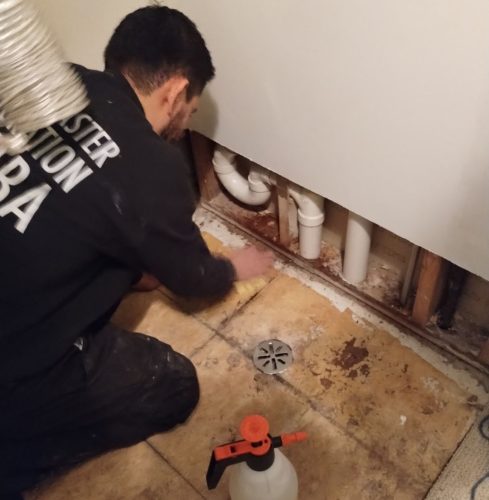
On January 16, 2026, a homeowner in Chicago’s Avondale neighborhood called ServiceMaster Restoration by Zaba after a sewage backup caused Category 3 water damage in their home. Contaminated water had spread into the laundry room, utility room, linen closet, and hallway, which soaked the lower walls, carpet, flooring, and baseboards.
Our team assessed the damage, identified the materials that needed to be removed, and planned the cleanup, sanitization, and structural drying of the property.
Here’s what our initial inspection uncovered and how we addressed each affected area:
Laundry Room
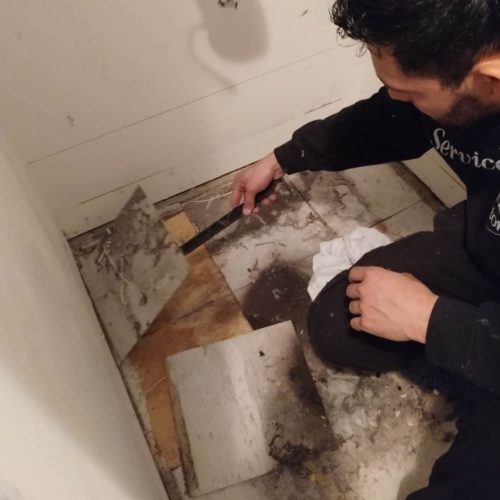
- Water-damaged walls and baseboards. Contaminated water affected the lower walls and trim, so we had to remove the baseboards and cut out the bottom 2 feet of drywall to reach the damaged areas.
- Damaged vinyl tile flooring. We removed the affected vinyl tiles so we could clean the floor underneath.
- Appliances and doors blocking access. We needed to detach the stackable washer and dryer and remove the bi-fold doors to reach the damaged walls and flooring.
- Contaminated surfaces. We cleaned and sanitized exposed surfaces, then used one commercial air mover to help dry the room.
Utility Room
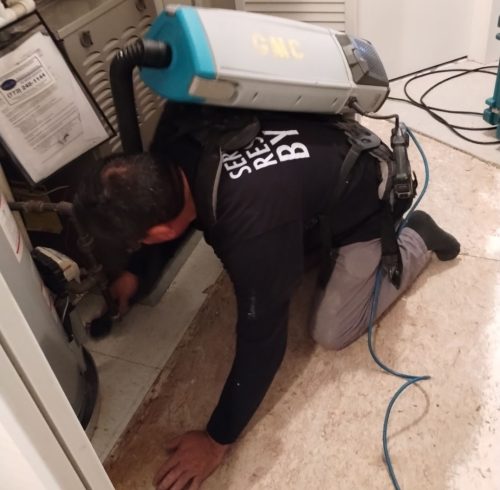
- Contaminated flooring. We vacuumed the floor to remove residue and debris, followed by cleaning and sanitizing the affected surfaces.
- Moisture in the room. We placed one commercial air mover in the utility room to help dry the floor after cleaning and sanitizing it.
Linen Closet
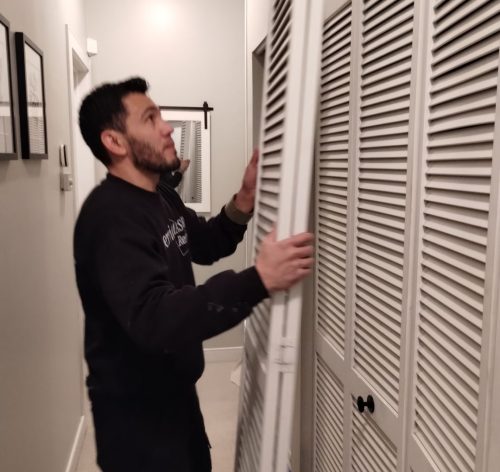
- Limited access to the flooring. We needed to detach the bi-fold closet doors to reach and remove the damaged materials.
- Sewage-damaged carpet and padding. Contaminated water affected the closet flooring, so our team removed the carpet, padding, and tack strips.
Hallway
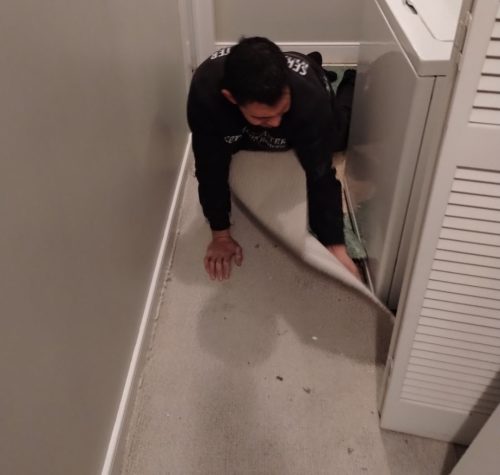
- Contaminated carpet and padding. Water reached the hallway carpet, so we removed the carpet, padding, and tack strips.
- Water-damaged baseboards. Our team removed the baseboards along the side of the hallway connecting the affected rooms.
- Moisture and airborne particles. We used one dehumidifier, one air mover, and one HEPA air scrubber to dry the affected areas and filter airborne particles during cleanup.
Drying and Sanitization
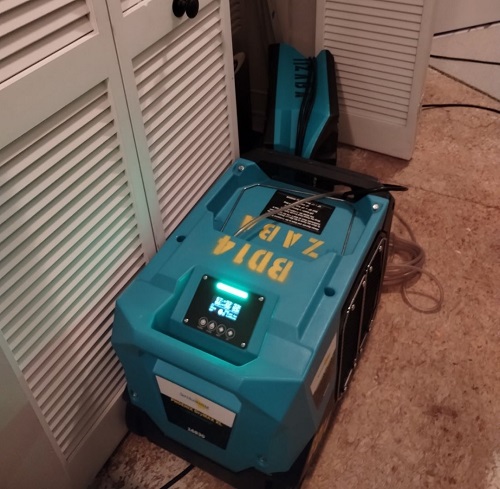
Because sewage water had soaked into the carpet, padding, and lower walls, we needed to remove the contaminated materials, clean and sanitize the exposed surfaces, and thoroughly dry the affected areas.
We used:
- One dehumidifier to remove moisture from the air and support structural drying.
- Three air movers across the affected rooms to dry wet surfaces.
- One HEPA air scrubber to filter airborne particles during the cleanup.
We also checked for possible mold growth and made sure to thoroughly dry the affected areas before repairs.
The Timeline
January 16 – Sewage Backup Inspection and Initial Cleanup
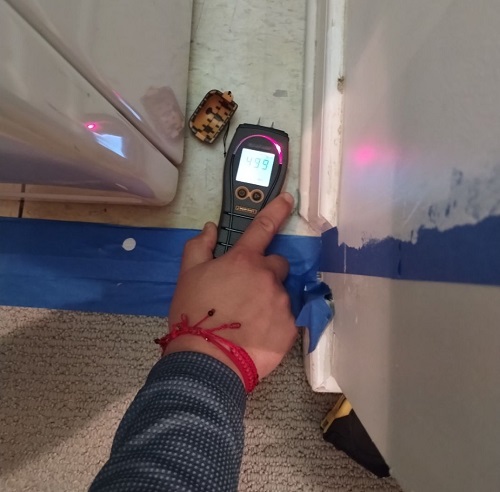
The homeowner called us on January 16, 2026, after a sewage backup caused Category 3 water damage in several areas of the home.
- Inspected the laundry room, utility room, linen closet, and hallway to determine how far the contaminated water spread.
- Checked the lower walls, flooring, and baseboards to identify materials that needed removal.
- Planned the demolition, cleaning, sanitization, and drying work.
January 17–18 – Removal of Contaminated Materials
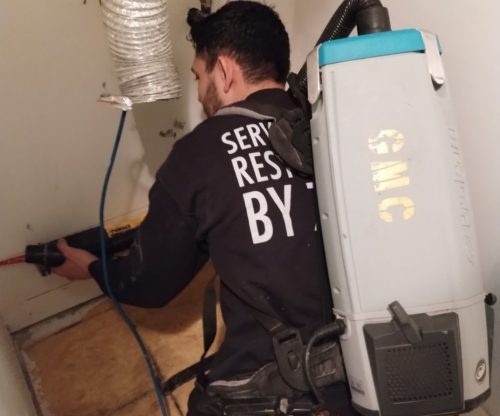
- Detached the stackable washer and dryer and bi-fold doors in the laundry room to reach the damaged areas.
- Removed the laundry room baseboards, cut out the lower 2 feet of affected drywall, and took out damaged vinyl tile.
- Removed contaminated carpet, padding, and tack strips from the linen closet and hallway.
- Removed affected baseboards along one side of the hallway.
January 19–20 – Cleaning, Sanitization, and Structural Drying
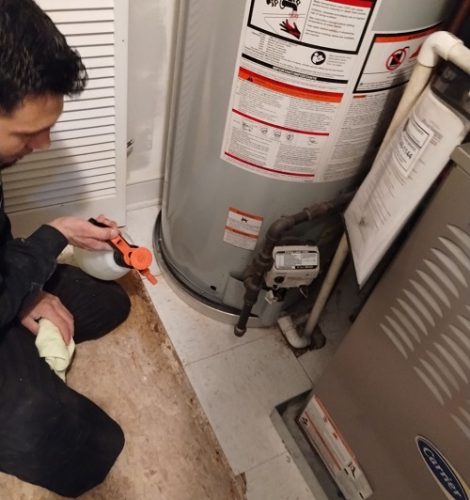
- Vacuumed, cleaned, and sanitized the exposed floors and surfaces in the laundry room and utility room.
- Set up three air movers and one dehumidifier to help dry the affected rooms.
- Used one HEPA air scrubber to filter airborne particles during cleanup.
- Checked the affected areas for remaining moisture and possible mold growth.
January 21 – Final Cleaning and Mitigation Completion
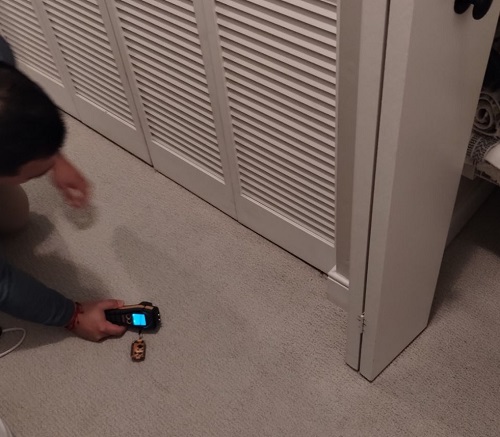
- Checked the drying progress and inspected the exposed areas for remaining moisture.
- Vacuumed and cleaned the affected rooms after removing damaged materials.
- Completed the sewage cleanup and water damage mitigation work, leaving the affected areas ready for repairs.


