
Location: Buffalo Grove, Illinois
Property Type: Multi-unit residential property
Service Provided: Water damage mitigation, cleaning, and structural drying
Cost of Services: $16,800
The Problem and Our Solution
We responded to water damage caused by a hot water tank leak in an upstairs unit of a residential property on February 19. Water seeped into the apartment below and damaged ceilings, walls, and flooring in several rooms. When we assessed the damage, we found that water had gotten into the utility room, dining room, living room, bathroom, and hallway.
We classified the water damage as Class 2 due to the extent of moisture absorption and Category 2 due to potential contaminants in the water. Here’s what we found throughout the property and how we addressed each issue:
Utility Room
- Water-damaged ceiling and walls. Water damaged the ceiling, approximately 72 square feet of wall, baseboards, and trim. We opened the damaged ceiling and wall sections to reach moisture trapped behind them.
- Damaged laminate flooring. Water also reached the laminate flooring, which we removed. We then vacuumed, cleaned, and sanitized that area.
Dining Room
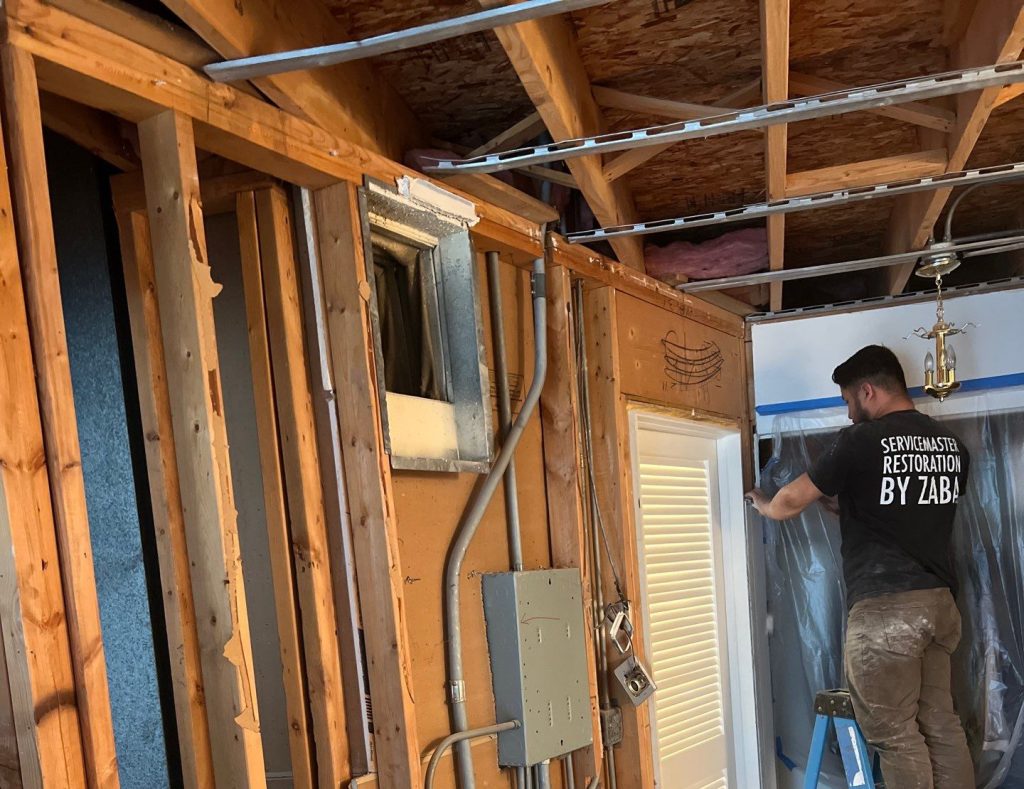
- Water-damaged ceiling and walls. Water reached the ceiling, a full-height wall, baseboards, and trim. We removed damaged sections to reach the wet materials behind them.
- Damaged hardwood flooring. As work progressed, we determined that we had to remove all the hardwood flooring. We also removed the perimeter baseboards and then cleaned and sanitized the surfaces.
Living Room
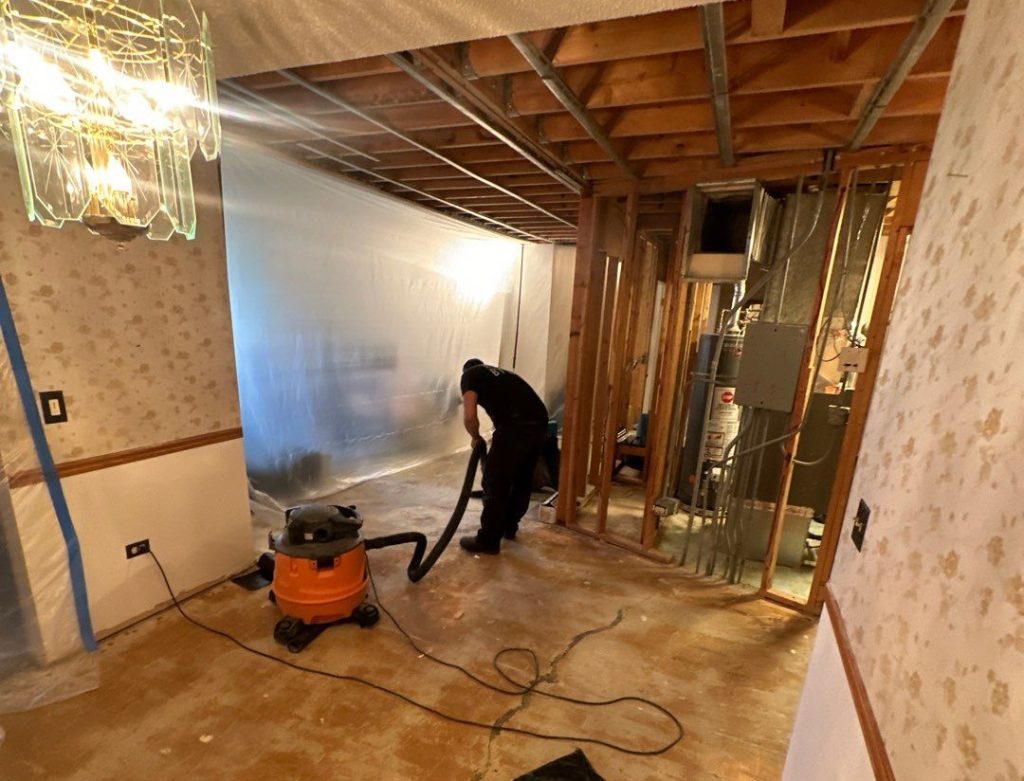
- Water-damaged ceiling. Water spread into the ceiling, and we had to remove approximately 20% of it.
- Damaged carpeting. We removed approximately 30% of the carpeting, padding, and tack strips, then cleaned the exposed flooring.
Bathroom
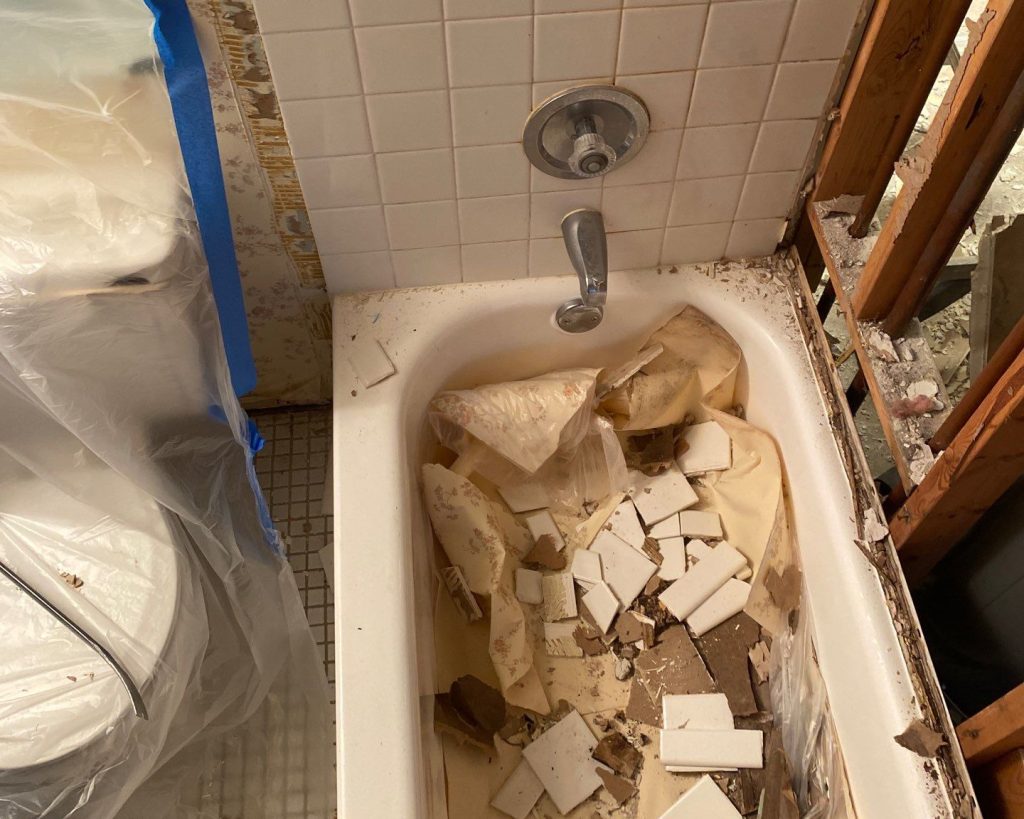
- Water-damaged ceiling and walls. Water damaged the entire ceiling, a full-height wallpapered wall, baseboards, and ceramic tile around the bathtub. We removed the damaged ceiling and opened the wall where necessary to reach trapped moisture.
Hallway
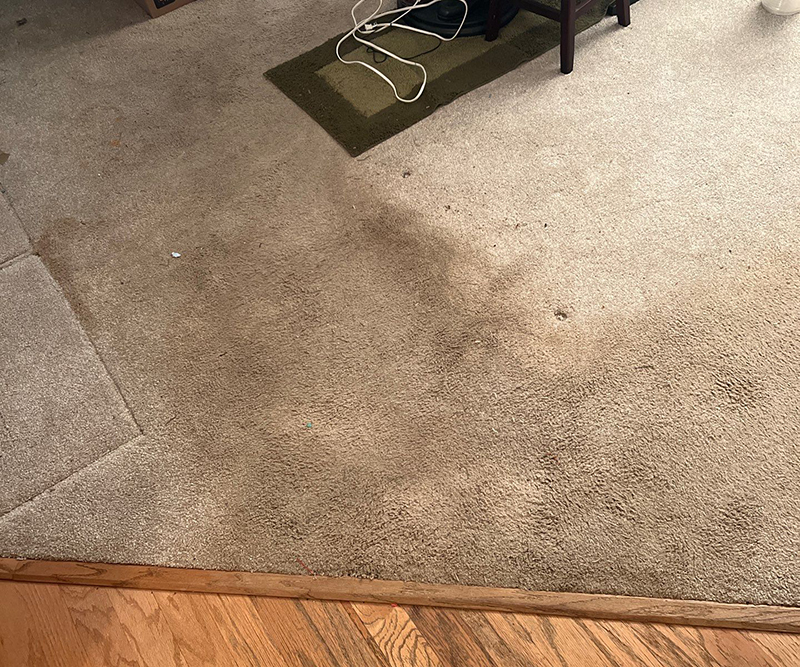
- Water-damaged carpeting. There was damage around the carpeting, padding, and tack strips. We removed the damaged materials and cleaned the exposed flooring.
The Timeline
February 19 – Hot Water Tank Leak
The problem started with a hot water tank leaking in the apartment above. This caused water to seep into the lower unit, affecting several rooms and building materials. We classified the loss as Class 2, Category 2, and initially estimated a drying time of four days.
February 19 – Initial Mitigation and Drying Equipment Setup
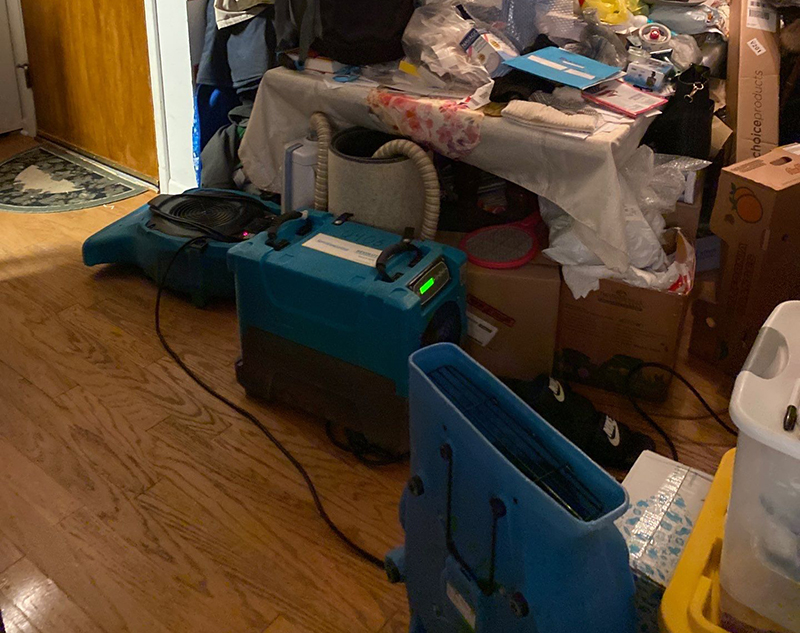
- Set up six air movers and two dehumidifiers in the bathroom, dining room, living room, and utility room.
- Identified damaged ceilings, walls, flooring, and insulation that we need to remove or treat.
February 20 – Removing Damaged Ceiling Materials, Cleaning, and Structural Drying
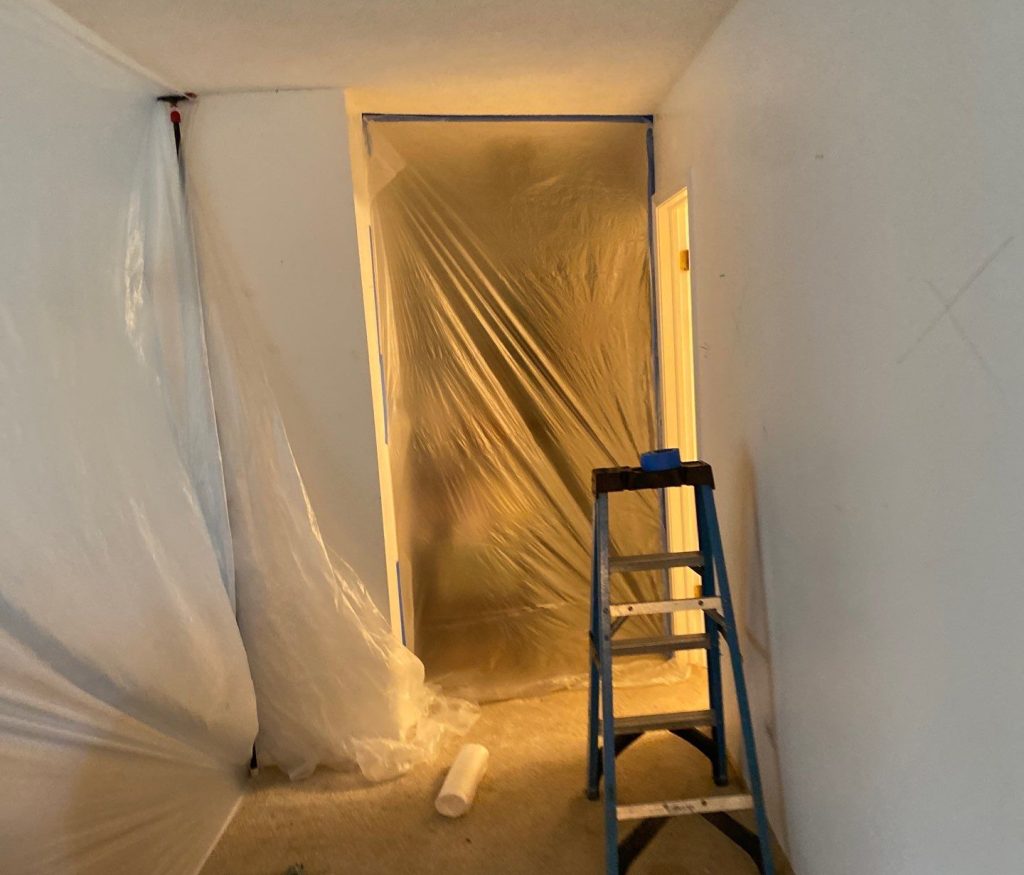
- Opened ceiling areas using power tools to reach water-damaged materials.
- Used plastic containment to protect surrounding areas from dust and debris.
- Vacuumed affected surfaces to remove debris.
- Used 15 air movers and one dehumidifier across the dining room, utility room, living room, and bathroom.
- Monitored indoor drying conditions, recording 37.2% relative humidity and a temperature of 76.1°F.
February 21 – Continued Cleaning and Mitigation
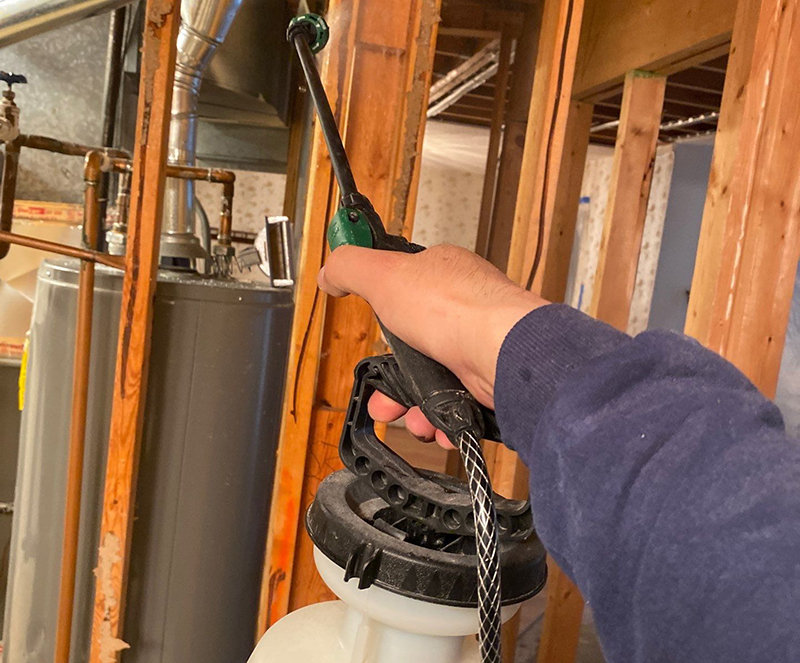
- Continued vacuuming and cleaning affected areas.
- Removed laminate flooring from the utility room, carpeting and padding from the hallway, and all hardwood flooring and perimeter baseboards from the dining room.
- Continued cleaning and sanitizing work on affected surfaces.
February 22 – Moisture Monitoring and Drying Progress
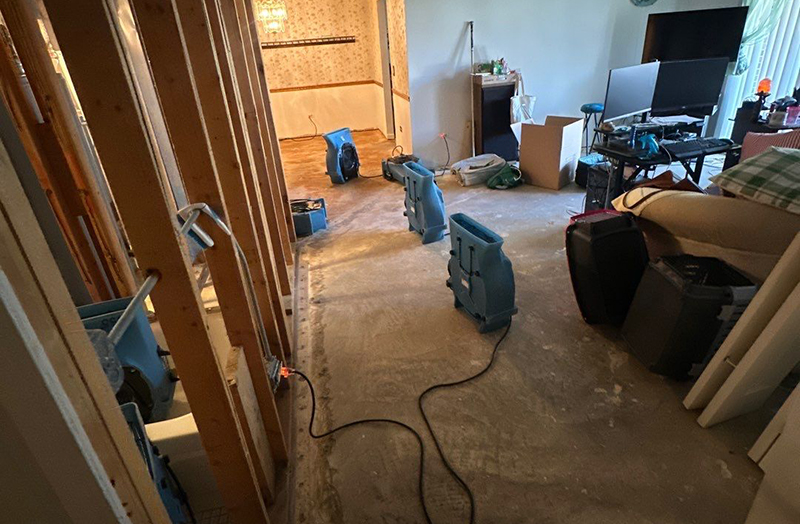
- Continued monitoring moisture levels throughout the property.
- Kept air movers working in the affected areas.
- We checked several areas with a moisture meter and confirmed that the materials had dried.


