
A homeowner in Old Town called ServiceMaster Restoration by Zaba after discovering water damage spreading from their master bathroom.
The leak originated in the main-level master bathroom and quickly spread through walls and floors, affecting multiple rooms on both the main level and the basement unit below.
Our team responded immediately to contain the damage, remove all wet materials, and begin the drying process.
What Caused the Damage
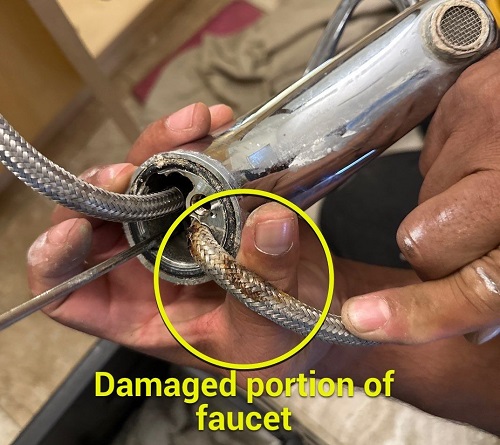
The water damage began with a plumbing failure in the master bathroom on the main level.
Water traveled through the floor and into wall cavities, eventually reaching the basement unit and even the shared garage below.

How We Restored the Home
Each room required careful attention. Our crew worked quickly to remove saturated materials, set up professional drying equipment, and sanitize all affected areas:
Master Bathroom (Source Room)

- Detached and removed the double sink and vanity to access hidden moisture.
- Performed a 2-foot flood cut on the wall behind the vanity to remove wet drywall.
- Removed partial door trim, all tile baseboards, and the entire tile floor.
- Vacuumed, cleaned, and sanitized the exposed subfloor and stud walls.
- Positioned three air movers to start the drying process.
Master Bedroom

- Moved and protected furniture and belongings with plastic sheeting.
- Removed partial baseboards and performed 2-foot flood cuts on walls where baseboards were removed.
- Pulled up all hardwood flooring to prevent further moisture absorption.
- Vacuumed, cleaned, and sanitized the subfloor and wall cavities.
- Set up five air movers and one dehumidifier to remove moisture from the structure.
Closets
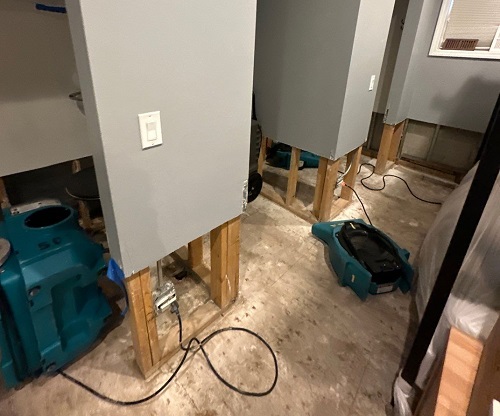
- Carefully handled personal items and protected contents with plastic.
- Removed baseboards and all flooring from both closets.
- Cut 2 feet of drywall from the affected walls to expose trapped water.
- Vacuumed, cleaned, and sanitized all exposed surfaces.
- Placed one air mover in each closet to circulate air and accelerate drying.
Bedroom 2 (Behind Master Bathroom)
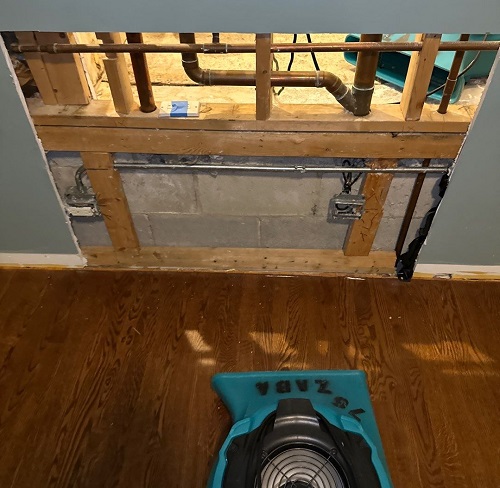
- This room was added to the scope after we confirmed hidden water intrusion with moisture detectors.
- Moved and protected furniture and belongings with plastic barriers.
- Removed 12 linear feet of baseboards and 10–12 linear feet of drywall along the wall shared with the master bathroom.
- Vacuumed, cleaned, and sanitized the subfloor and stud walls.
- Set up one air mover to dry the affected wall cavity.
Guest Bedroom
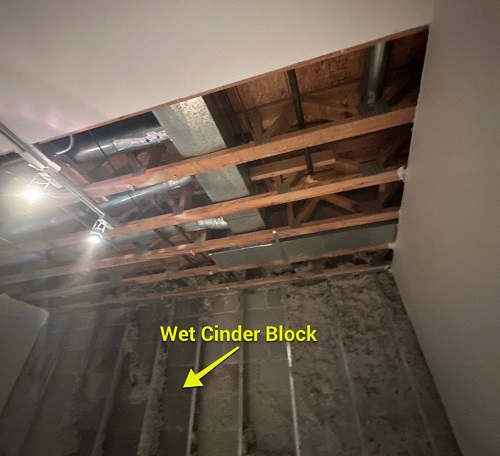
- Protected and relocated contents to prevent further damage.
- Detached the track light, register, and smoke detector before beginning demolition.
- Removed half of the ceiling and any wet insulation above.
- Performed a full flood cut on the exterior wall, removing drywall, baseboards, and insulation.
- Removed half of the hardwood flooring where we detected saturation.
- Vacuumed, cleaned, and sanitized all exposed surfaces.
- Positioned five air movers and one dehumidifier to remove moisture from the ceiling cavity and walls.
Garage (HOA Common Area)
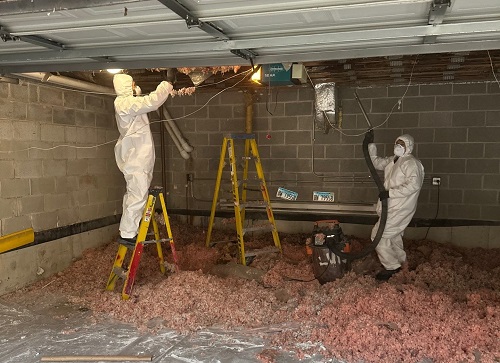
- Coordinated directly with the HOA to address damage in this shared space.
- Removed the full ceiling and all wet insulation to prevent mold growth.
- Vacuumed, cleaned, and sanitized the garage floor and joist system.
- Set up four air movers and one dehumidifier to thoroughly dry the overhead structure.
The Outcome
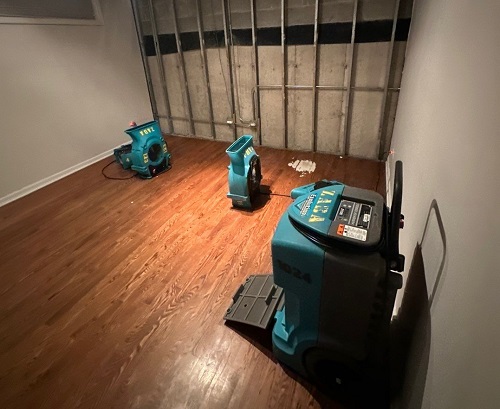
We completed structural drying in just four days, confirmed that moisture levels had returned to normal, and prepared the condo for reconstruction.
Our team coordinated closely with the insurance provider and the HOA to streamline the claims process and ensure all parties stayed informed.
The homeowner returned to a clean, dry, and fully restored living space, ready for the next phase of repairs.
If You’re Dealing With Multi-Level Water Damage

Older buildings and multi-level layouts make water damage more complex in Old Town condos. If water spreads beyond one room:
- Check units below and shared spaces right away. Water often travels downward into basements, garages, and common areas.
- Put all HOA communication in writing. Clear documentation prevents disputes over who’s responsible and speeds up repair approvals.
- Address wet insulation immediately. Wet insulation holds moisture and leads to mold if you don’t remove and replace it.
- Have ServiceMaster Restoration by Zaba check that everything is dry before you reinstall the flooring. Hardwood and engineered flooring can look dry on top while moisture stays underneath, causing warping later.
- Check for moisture behind the walls. Bathrooms are common sources of hidden leaks, and water can move sideways through wall cavities. ServiceMaster Restoration by Zaba uses moisture meters and thermal imaging to detect water trapped inside walls.


