
A homeowner in Streeterville called ServiceMaster Restoration by Zaba after water began leaking into their condo.
The leak was caused by a broken toilet supply line in the unit above. Water traveled fast, soaking ceilings, walls, and floors across several rooms.
Our team responded immediately to stop the damage, dry the space, and begin restoration.
What Caused the Damage

The water damage began when the upstairs unit’s toilet supply line burst.
Water entered the condo below, seeping into building materials and contents before the leak was discovered.
How We Restored the Home
Each room required a tailored approach. Our crew moved quickly to remove wet materials, set up drying equipment, and sanitize all affected areas.
Office
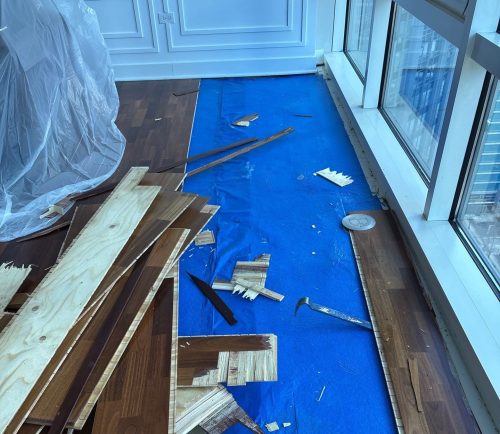
- Covered furniture and electronics in plastic to keep them safe during the process.
- Removed baseboards, carpet, padding, and tack strips to prevent moisture from spreading.
- Cut out a full section of drywall from floor to ceiling to access trapped water.
- Vacuumed all surfaces and applied antimicrobial treatment.
- Set up three air movers to begin drying immediately.
Kitchen
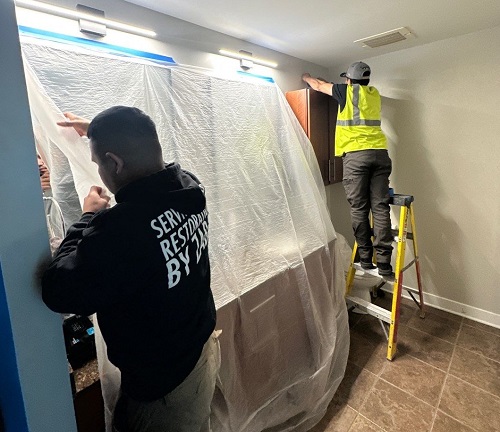
- Installed plastic protection and containment barriers to isolate the workspace.
- Moved the fridge and dishwasher out of the way, then reinstalled them after drying.
- Removed cabinet toe kicks to allow airflow underneath.
- Removed a full-height cabinet to expose wet drywall behind it.
- Pulled up engineered wood flooring that had absorbed water.
- Cleaned and sanitized the area before placing three air movers to dry the space.
Living Room

- Moved and protected furniture and contents before starting demolition.
- Took out engineered hardwood floors and all baseboards due to saturation.
- Performed flood cuts on partial walls and removed soaked drywall from floor to ceiling.
- Cleaned all exposed surfaces with disinfectant.
- Positioned four fans and one dehumidifier to remove moisture from the air and structure.
Master Bedroom
- Handled personal belongings with care and moved them to a dry area.
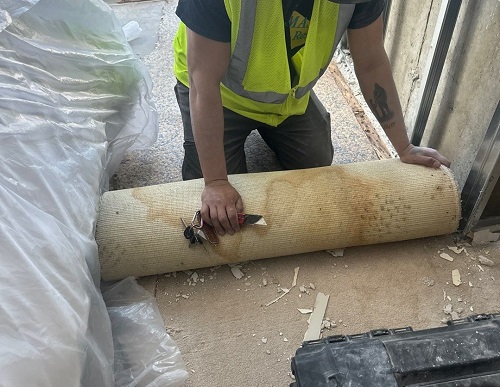
- Pulled out carpet, padding, and tack strips to reach the subfloor.
- Removed one wall section from floor to ceiling where water had pooled inside.
- Disinfected all surfaces and placed three fans to dry the room thoroughly.
Master Bedroom Closet

- Removed carpet, padding, baseboards, and tack strips to expose affected surfaces.
- Cut into the wall where moisture readings showed trapped water.
- Sanitized the closet and placed one fan to begin drying, with more equipment added as needed.
Closet Above Bathtub
- Took down tile and drywall above the tub to expose water-damaged framing.
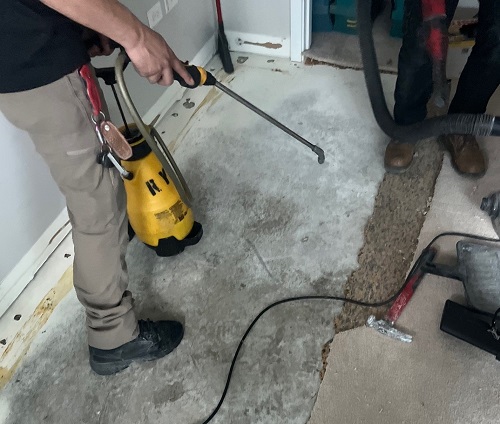
- Cleaned and treated the entire area to prevent mold growth.
- Set up three fans to dry the wall cavity and surrounding surfaces.
The Outcome
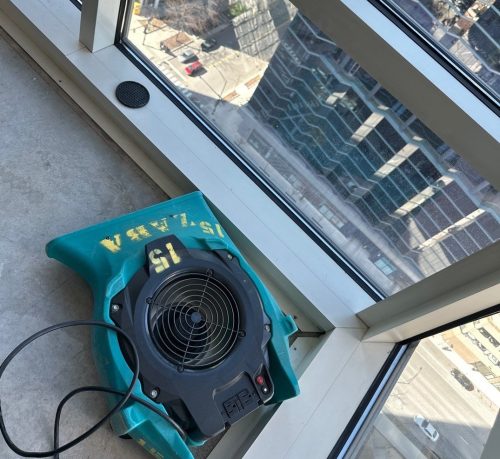
We completed structural drying, confirmed that moisture levels had returned to normal, and prepared the condo for repairs.
Our team handled the entire cleanup and worked directly with the insurance provider to simplify the claim.
The homeowner returned to a clean, dry, and fully restored living space.
If You’re Dealing With an Upstairs Water Leak

Living in a high-rise or mid-rise building means water can travel fast and far. If you’re facing a similar situation:
- Shut off your own water supply and call building management right away.
- Document everything before cleanup starts. Take photos of ceilings, walls, floors, and your belongings. This protects you during the insurance and HOA claim process.
- Don’t assume the damage is just on the surface. Water often hides behind ceilings, inside walls, and under flooring. Call Chicago-based restoration professionals like ServiceMaster Restoration by Zaba to assess the full extent of the damage.
- Don’t try to dry your condo yourself with household fans. You need professional drying equipment with moisture monitoring to prevent mold in shared walls and ceilings.
- Monitor the affected areas after cleanup. Musty smells, bubbling paint, or stains that appear weeks later can mean there’s hidden moisture trapped in your walls or ceiling.


