
A leaking patio roof can quickly spread water damage to the rooms below and compromise your walls, floors, and foundation.
At ServiceMaster by Zaba, we’ve spent decades helping Chicago homeowners recover from water damage, and we know firsthand how fast a small leak can turn into costly repairs.
Read on to learn what’s causing your leaking patio roof and what you can do to stop the damage before it spreads.
- Even a minor patio roof leak can escalate into significant structural damage, as water can seep into the rooms below, soak through your walls and floors, and compromise your home’s structure before you even notice the damage.
- If your patio roof starts leaking, protect your belongings by moving them somewhere safe and dry, document the damage, remove the standing water, dry the area, and check for hidden moisture.
- For professional water damage restoration services in Chicago, contact ServiceMaster by Zaba: (773) 647-1985.
Why Is My Patio Roof Leaking?
1. Rusted or Loose Fasteners
The screws and bolts that hold your patio roof in place may loosen or deteriorate over time.
Snow and ice that sit on the fasteners cause rust, as do extended periods of rainfall.
Additionally, Chicago’s freeze-thaw cycles cause roofing materials to contract and expand.
Signs:
Routinely inspecting your roof can help you spot the issues early.
Look for drips around screws and along seams. You should also look for cracked or missing washers.
DIY fix:
Fortunately, you can usually fix these problems pretty quickly.
Tighten screws when you see that they’re raised or loose and replace rusted fasteners with rubber-sealed roofing screws.
Be mindful of overtightening, as this can do damage to the roof.
2. Damaged Flashing
Flashing is the metal barrier that seals the joint between the roof of your patio and the roof of your home.
When the flashing or sealant gets damaged, water may leak in along that seam.
Chicago winters speed up the deterioration, with freezing temperatures and extended periods of heavy snowfall.
Sealant naturally dries and cracks over time, and that process is sped up by ice dams and heavy rains that place more stress on the connection.
Signs:
Keep an eye out for cracked or peeling sealant and gaps between flashing and your home’s siding.
Water stains along the wall attaching your patio to your house are also an indicator.
DIY fix:
Reseal minor separations with 100% silicone or elastomeric sealant.
While this can resolve minor issues, you may need professional repairs for larger gaps.
3. Damaged Roof Panels
A damaged roof is the easiest way for water to damage your patio.
Cracks, holes, dents, and warped sections of roofing allow water to penetrate the subsurface, and from there, it drips onto your patio and even into your home.
Hail and wind storms, both of which are common in Chicago, as well as debris impact from heavy winds, are among the leading causes of roof damage.
They’re even more dangerous if you have an aging roof.
Signs:
Regularly check for cracks and visible signs of damage on your patio roof, especially after storms.
DIY fix:
While roofing tape can seal up most minor cracks, you’ll need to hire a professional contractor to replace severely damaged portions of the roof.
4. Clogged Gutters or Poor Drainage
Your gutters and downspouts play a pivotal role in the health of your roof.
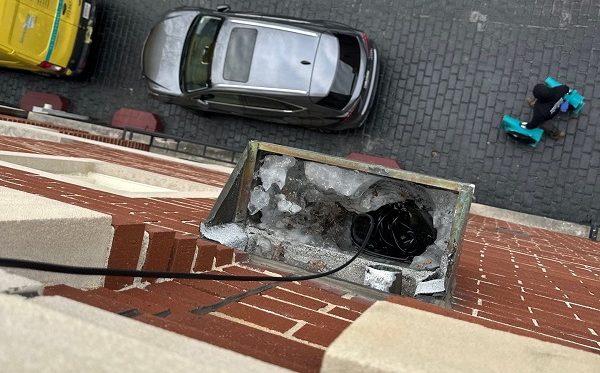
When gutters, downspouts, and scupper boxes become blocked, water backs up onto your roofing materials.
When twigs, dirt, and leaves accumulate, water has nowhere to go.
Ice and snow can block drainage in the winter, making this a year-round issue.
Signs:
This problem is easy to identify.
Look for overflowing gutters when it’s raining, standing water near drainage points, and visible debris at the bottom of your downspouts or peeking over the edge of your gutter system.
DIY fix:
Regularly clean your gutters and flush your downspouts to ensure that water can safely drain away from your patio.
5. Pooling Water From Low Roof Slope
The roof over your patio needs to be sloped enough to facilitate drainage.
When it’s not, water pools, which speeds up the degradation of your roofing materials.
While this is a design issue, it becomes a problem during periods of heavy snow and rain, which we often see in Chicago.
Signs:
Look for discolored areas along the inside of your patio.
Leaks after prolonged rainfall, and water standing on the roof generally mean that your roof isn’t sloped enough.
DIY fix:
Pond-resistant sealant can provide some temporary relief, but long-term drainage solutions typically require the work of a roofing professional.
What to Do About Water Damage from the Leak
1. Protect Your Belongings
If your patio roof is leaking, move your furniture, outdoor décor, and any electronics to a safe, dry place.
Place buckets under drips and use towels or plastic covering to stop water from spreading.
Tip: Pay careful attention to any items stored against walls, as that’s where water damage is most prevalent.
2. Document the Damage
If you plan on filing an insurance claim, you’ll need to document the damage.
Filing an insurance claim helps ensure that you don’t have to spend money on new construction materials, and may even cover the cost of any items that can’t be salvaged.
3. Remove Standing Water
If you have a wet/dry vacuum, use it to remove any standing water. You can also use a mop to get puddles off your patio.
Every minute matters when you have standing water on your patio, so act quickly to avoid any further damage.
4. Dry the Area
Even with standing water out of the way, there will still be moisture on the floor.
If possible, open the windows to allow the space to ventilate naturally. You can also use fans to further promote airflow.
Consider setting a dehumidifier in the space to help it dry thoroughly.
In a moist environment, mold spores can form and multiply within 24 to 48 hours.
While surface dryness doesn’t guarantee internal dryness, it can help delay mold growth.
5. Check for Hidden Moisture
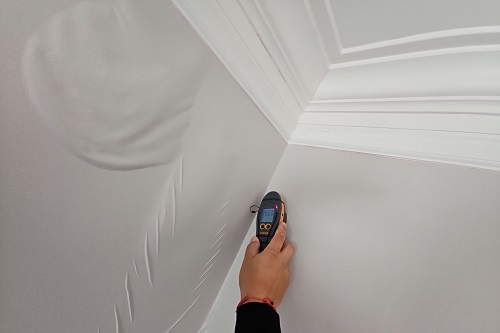
Moisture can easily hide in walls, above ceilings, and under flooring materials.
Look for bubbling paint, soft drywall, and sagging ceilings, as they are all signs of internal moisture.
Musty odors can also let you know that there’s moisture that you cannot see.
If you can see your insulation, look for signs of water damage, including wet or saturated material and any deterioration on nearby walls or ceilings.
6. Call ServiceMaster Restoration by Zaba
Call a water damage restoration professional if you find damage in your walls, ceilings, or insulation, notice mold, or the leak went unnoticed for days.
At ServiceMaster by Zaba, we use professional-grade moisture detection equipment to locate any hidden water and industrial drying equipment to dry everything out thoroughly.
This helps protect your home’s structural integrity and reduces the risk of mold growth.
Dealing With a Roof Leak in Chicago? We Can Help
Don’t let damage spread and repair costs increase by waiting to call us after your patio suffers water damage.
Let our team determine the scale of the problem and help you create a plan to restore your patio.
Call ServiceMaster by Zaba for expert water damage restoration services: (773) 647-1985
FAQs
Who is responsible for leaking roofs?
If you’re renting a home in Chicago, the landlord is responsible for a leaking roof.
For townhomes and condos, the responsibility generally falls on the HOA.
For single-family homes, the homeowner assumes responsibility.
How can I prevent leaks from a patio roof?
One of the best ways to prevent leaks from a patio roof is to facilitate drainage.
This includes making sure gutters and downspouts are clear.
Noticing early signs of wear and tear, such as loose or damaged fasteners, can also help you avoid water damage.
Will my insurance cover damage from a roof leak?
Generally, insurance covers damage caused by a roof leak.
Contact your insurance company to make sure that your policy includes coverage for this type of damage.


